
AI in Mobile Development: How AI Is Changing App Development
Published on September 24, 2026
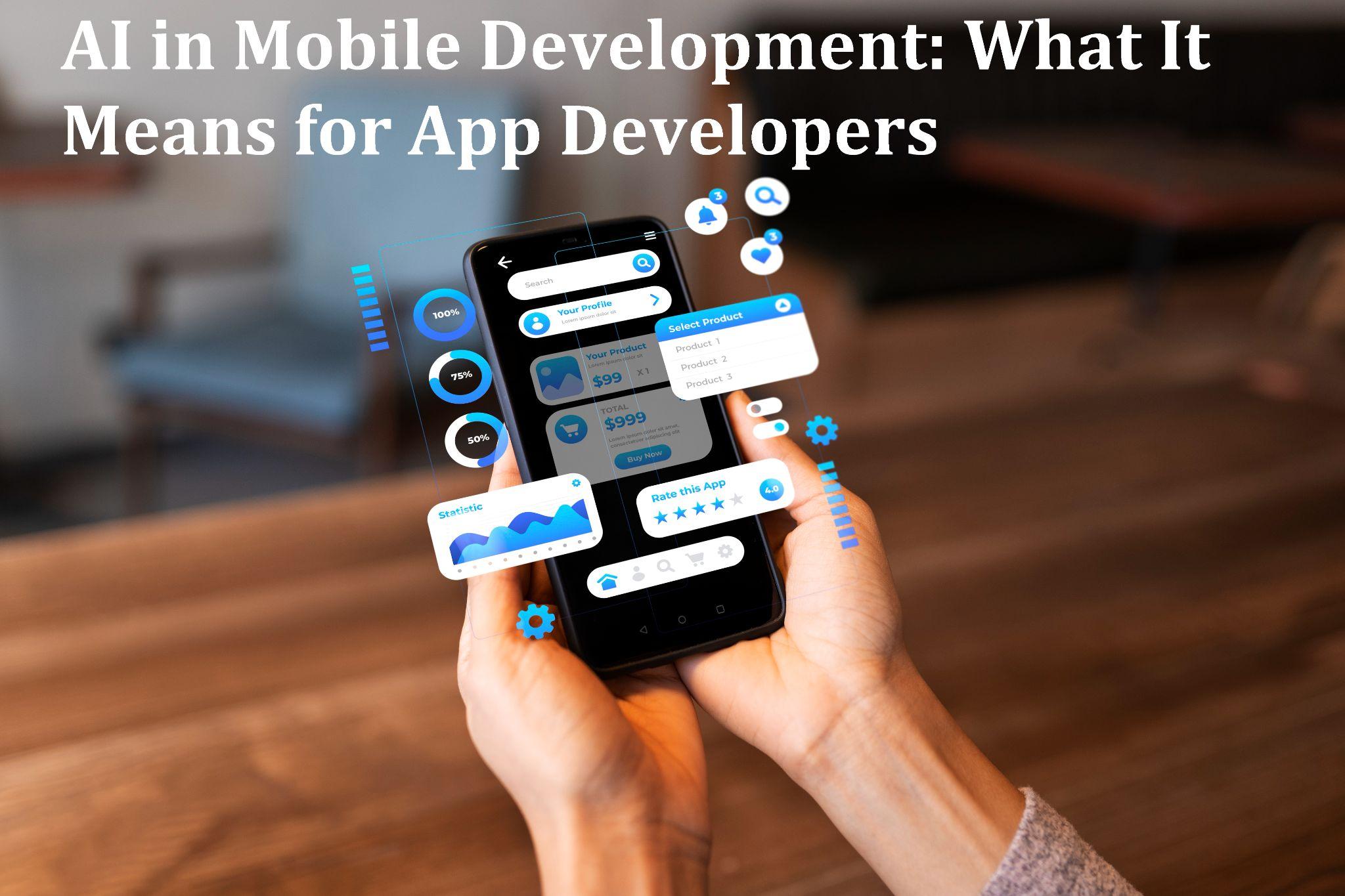
AI is one of the most impactful technologies with a lower entry barrier. If you have enough data and skills, you can use AI anywhere, as it has applications in almost every aspect of our lives. Small businesses often find it hard to compete with giants in the industry, as they cannot gain a larger market share from them or beat them. But if you invest in the right technologies, you can definitely make an impact and create a level playing ground.
AI is one such technology that can help mobile app development compete with giants and, in some ways, beat them at work. In this article, we will explore how AI can be used in mobile app development and how mobile app developers can benefit from that.
So, let’s start by looking at how AI can be used in mobile apps.
How can AI be used in Mobile Apps?
Here are the ways how you can use AI in mobile apps.
Secure Apps
Today, AI models are powerful as they can harness real-time data, analyze it, and generate insights from it quickly. This ensures every network traffic information is analyzed for security and makes the overall apps secure.
Moreover, AI models can be used to detect and prevent fraud happening in your mobile apps, and save you significant money that can be lost due to fraud. You can also use AI models for access control evaluation, so that each action is evaluated before allowing, and this provides better control over who can access your apps and what they can do with your mobile app.
Chatbots and Automation
Every mobile app needs a support service so customers can seamlessly use the app and get timely and accurate help when they need it. With AI models, you can develop chatbots and automations that help customers solve their issues faster and ensure a seamless user experience.
Whether it is about raising a customer complaint for any feature, or solving it by providing accurate and human-like support, AI chatbots and automation tools can definitely do this.
Voice and Image Recognition Capabilities
Mobile apps are going a step ahead in catering to unique user experiences, and voice/image recognition capabilities are the future. AI-powered Image recognition helps customers to find things quickly in your catalogs and removes the need for them to remember exact product names or codes on your mobile app.
You can also integrate voice recognition and voice search features, which help customers to use the search functionality through voice commands. These voice commands can then be translated to actual queries using AI models and then passed to your mobile app’s backend services.
Advanced Analytics and Insights
Generating analytics and insights from operational data is important if you want your mobile app to succeed. But with so much data being generated from app usage, it is tough to analyze it manually and generate accurate insights that can drive development efforts and growth in the right direction.
AI models help here, too. They can analyze large datasets from your mobile apps and generate awesome analytics and insights that can help you define your development efforts for the next set of features, and alleviate user issues quickly to enhance user experience.
Personalized User Experience
AI in mobile apps can learn from user behaviors, preferences, and other data points and then use that to create a personalized user experience. By providing a personalized user experience, you can also increase your app’s user base.
Suppose your mobile app is used by customers who frequently search for cycles in your store. AI can provide them personalized recommendations in the form of cycling gear, athletic wear, and other such supporting items that enhance their customer experience.
Having known about some of the ways AI can be used in mobile apps and development, let’s look at how it benefits developers.
Benefits of AI in Mobile App Development for Developers
Let’s explore the benefits of AI in Mobile App Development and how developers can benefit from it.
Faster Prototyping
AI helps in developing prototypes faster, so you can validate your ideas faster and decide whether they should be developed further as feature-rich mobile apps. Tools like code assistants and automated testing tools help in writing boilerplate as well as basic code that is good for prototype projects.
Data-driven Decisions
Developers often struggle with making application and product management decisions, but this can be easier with AI models. These AI models can be used to ingest and analyze large amounts of application data and leveraged to understand user painpoints, and even take data-driven decisions to improve user experience, roll out new features, and plan a product roadmap better.
Better App Performance
Many feature-rich mobile apps consume significant resources on the mobile, and this results in substandard performance. Improving performance is critical as it results in better user experience, and without a good user experience, no one will like to use your apps.
AI can help in optimizing mobile app codebases so that they can use fewer resources and deliver much better performance as compared to unoptimized apps on mobile.
Easier Integrations
Integrating newer technologies and features is always a struggle for developers, as this requires changing various parts of the mobile app’s codebase, and it is time-consuming, too.
With powerful AI models, you can create integrations with newer technologies much faster and ship new features with confidence. AI tools can help you write boilerplate code for integrating various technologies with your apps, and then you can modify them as per your business requirements.
Competitive Advantage
Developers and mobile apps that work with AI gain a competitive advantage as compared to those that don’t. Apps with AI features are in demand, and this ensures that you can have more users when you launch.
Similarly, developers who can work with SDKs and AI frameworks for mobile app development will be in high demand as they can help businesses build the latest mobile apps with AI features and models.
AI models are highly capable, and as a mobile developer, you should not overlook their capacity. It is not here to replace developers, and it is here to assist you. If you can build a mobile app in two weeks, with AI assistance, you can do it in under a week and achieve the same quality and features. For businesses looking to leverage this technology efficiently, it's crucial to hire app developers who understand how to integrate AI into the development process. So, if you are still not using AI, it is the right time to start using it in your mobile app development process.
Harikrishna Kundariya, is a marketer, developer, IoT, Cloud & AWS savvy, co-founder, and Director of eSparkBiz, a Software Development Company. His 15+ years of experience enables him to provide digital solutions to new start-ups based on IoT and SaaS applications.